
Dermatology-led skin, aesthetics & longevity in Notting Hill · The Platina Method · Open 7 daysDermatology-led skin & longevity · Notting Hill 020 8226 0165WhatsApp ushello@clinicplatina.com

Home / Skin Concerns /Jowls and jawline definition

Jowls and jawline definition

Jowls and a softening jawline are a natural part of facial ageing. Here's what causes them, and how we help restore definition without surgery.
Dr Adham Chakhachiro
Medically reviewed by Dr Adham Chakhachiro, NHS Dermatology Registrar. Last reviewed October 2026
At a glance
Often looks like
Softening along the jawline
Common drivers
Volume loss, laxity, gravity
Usual approach
Support, define, firm
Change usually seen
Immediate to 3 months

What it is

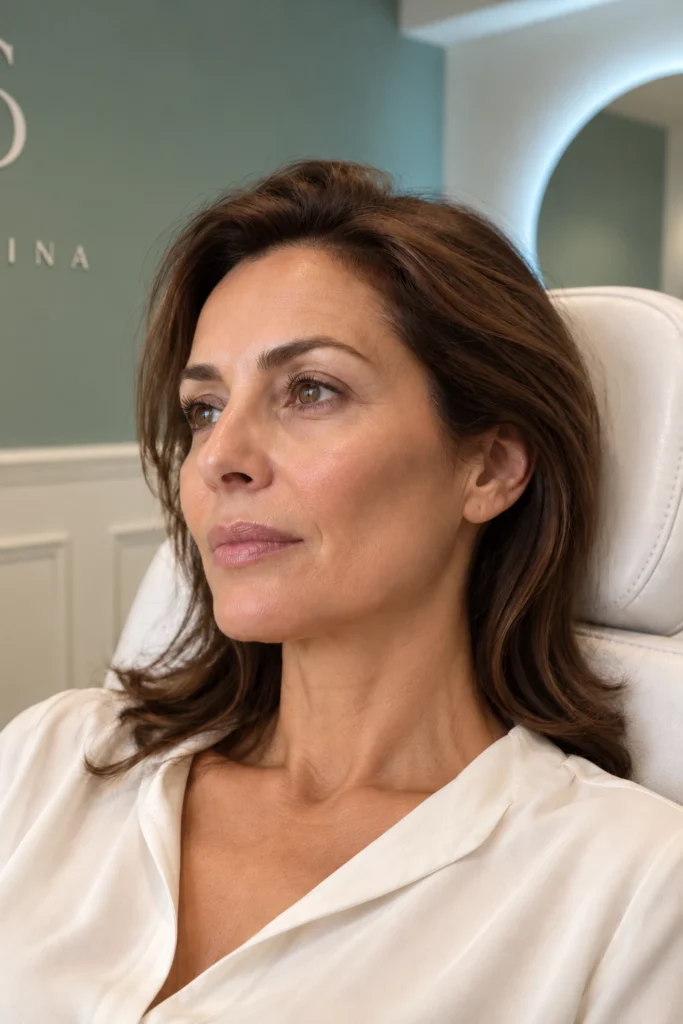
Jowls are the softening of skin and tissue along the jawline, below the corners of the mouth, that blurs the clean line from chin to ear. They develop gradually as the face loses bone and fat support, collagen declines and gravity takes its toll — and genetics play a big part in when and how they appear.

Because jowls are rarely caused by one thing, the most natural results usually come from treating the whole lower face. That may mean restoring mid-face support with cheek filler, redefining the jaw with jawline filler, improving firmness with Radiesse, or softening the downward pull of the neck muscles with a Nefertiti neck lift. Significant sagging may need a surgical opinion, and we’ll tell you honestly.

For patients across Notting Hill, Kensington and Chelsea, the aim is a cleaner, more defined jawline that still looks entirely like you.

What's driving it

Volume loss

As the cheeks and jaw lose fat and bone support, tissue moves downwards and gathers along the jaw.

Skin laxity

Declining collagen and elastin make the skin less able to hold its shape.

Muscle pull

The platysma muscle in the neck pulls the lower face downwards, blurring the jawline.

How we approach it

Every concern is assessed through The Platina Method™. These are the domains that shape the plan for this concern.
Clinical
Distinguishing volume loss, laxity, fat and muscle pull — and recognising when surgery is more appropriate.
Barrier
Renewal
Stimulating collagen to improve skin firmness over time.
Lifestyle
Weight changes, sun exposure and smoking all influence how the lower face ages.
Prevention
Early, modest treatment and daily SPF to slow progression.
Structure
Restoring support to the mid-face and jawline — the core of the plan.
Highlighted domains are the ones we'd focus on for this concern.

Frequently asked questions

What causes jowls?

A combination of volume loss, skin laxity and muscle pull, influenced by genetics, weight change and sun exposure.

Can jowls be treated without surgery?

Early to moderate jowling often improves with filler, collagen stimulators and muscle-relaxing treatment. More significant sagging may need surgery.

Will filler make my face look heavy?

Not when placed conservatively in the right areas. Supporting the cheeks often lifts the lower face more naturally than filling the jowl itself.

How long do results last?

Filler typically lasts 12–18 months in the jawline and cheeks, and collagen-stimulating results can last longer.

At what age do jowls appear?

It varies widely, often from the late thirties or forties, depending on genetics and lifestyle.

Can skincare help jowls?

Good skincare supports skin quality but won't lift jowls on its own. It works best alongside in-clinic treatment.

Related concerns

Dark circles
Fine lines

Not sure what's driving your skin concern?

Book a consultation for an honest, doctor-led assessment of what's going on and what's worth doing.

Book a skin consultation